Wednesday, October 24, 2007

Google Partners with Nielsen for TV Ads

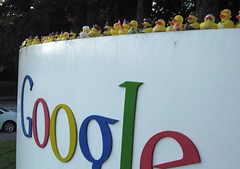
Google_tv_adsGooglers may be jumping ship, but that's certainly not stopping the company's non-stop acquisition and partnership plans. On Wednesday, the search giant announced a new multi-year "strategic relationship" with the Nielsen Company. Under the new deal, Google will pay the company an undisclosed amount of money for access to its demographic composition data on television audiences.

"By combining Nielsen demographic data with aggregated set-top box data, Google can provide advertisers and agencies with comprehensive information to help them create better ads for viewers and maximize the return on their advertising spending," the company said in a statement.

It's all a part of the search company's continuing effort to buttress its TV Ads platform. Operational since May, Google TV Ads exists to buy, sell, measure and deliver television ads. While Google hasn't needed much help to learn about the interests of internet users, measuring the interests of television viewers is a different story. Nielsen's demographic data will be combined with Google TV Ads set-top box information so advertisers can, in theory, evaluate the reach of an ad and only pay for actual set-top box impressions, Google says.

If there were any doubts about Google's interest in selling more ads in the mainstream media arena, not just the internet, I think those can safely dismissed at this point.

Thursday, October 11, 2007

Dell's 22-inch SP2208WFP with webcam and 24-incher out in Japan


It's not out in the US yet, but Dell just announced another webcam packing LCD monitor: the SP2208WFP for Japan. This 1,680 x 1,050 resolution 22-incher features a 2 megapixel webcam and microphone integrated flush with the upper bezel, a 2-ms response, 2,000:1 contrast, and the ability to reproduce 92% of the NTSC color gamut. Inputs? Oh hells yes: analog D-Sub 15, DVI-D (with HDCP), 3x HDMI, and 4x USB. Japan-only for the time being for a tax-inclusive price of ¥59,800 or about $510 whenever it pops Stateside. They've also announced a ¥68,800 ($587) 24-inch E248WFP prepped for a Japan release on October 23rd. This 1,920 × 1,200 model increases the color gamut from the 72% found in their current 24-incher to the same 92% found in the new SP2208WFP. Peep the 24-incher after the break.

[Via Impress]

Britney’s new video links

britney-spears-gimme-boobs-5.jpg

Britney’s New Video, Now With Boobs [yeeeah]
Lou Pearlman claims he’s not a child molester [Dlisted]
Kelly Rowland Tries to Stay Relevant [Bossip]
Midgets, Manskanks and Thugs, Oh My! [Pajiba]
Lunch with Linda Evangelista [Celebslam]
Emma Watson At The Pride Of Britain Awards [I’m Not Obsessed]
Adriana Lima in old Guess ads [The Bastardly]
Lance Bass’s new book says he knew Britney and Justin wouldn’t last. Thanks for the insight. [In Case You Didn’t Know]
Kim Kardashian has nothing going for her except T&A (Site NSFW) [Drunken Stepfather]
Hilary Duff wears Short Shorts on a Roof [Hollywood Rag]
John Travolta wants to fly the Spice Girls around in their jet [Seriously? OMG! WTF?]
Demi and Ashton are trying for a baby [Agent Bedhead]
Charlie Sheen bought a $6,000 anatomically correct latex girl that looks a lot like Denise Richards [The Blemish]
Kimberly Stewart’s Nose Job [Cityrag]
Did John Mayer Put One Foot Out Of The Closet? [Crazy Days and Nights]
Which Breakup Of 2007 Was the Most Sad So Far? [Popsugar]
Eva Mendes Playing Twister on TRL [The Grumpiest]
Hollywood’s Hottest Honkers… teehee [CelebNewsWire]
Backstreet Boys are back, alright! Yeah I’m hanging my head in shame now. [The Evil Beet]
Katie Holmes goes shopping. Shocking! [Gabsmash]
More Jennifer Lopez pregnancy rumors and pictures [Celebrity Warship]
Reese Witherspoon is Officially Single [I Don’t Like You in that Way]
Don’t Call It A Comeback: Bo Bice Never Went Away [Glitterati Gossip]
Joey Fatone & Family Visit The Melbourne Zoo [Celebrity Baby Scoop]
Is Oprah’s longtime boyfriend Stedman Graham seeking revenge? [Popbytes]
Rosie O’Donnell Opens Art Exhibit in New York [A Socialite’s Life]
Breaking News! Angelina Jolie Not Wearing Black [Just Jared]
Scarlett Johansson Pictures from Elle Magazine [Egotastic!]
Prince William gets a new assignment [Lifeline Live]
Grace is Gone with John Cusack trailer [CelebWorm]
The Perfect Gifts for J-Lo’s Babies! [Best Week Ever]
Diddy Sued Over Brawl At The Box [Rhymes with Snitch]

Download Mandriva 2008 … it’s HOT!

Mandriva 2008 Free

Ever since I tried Mandriva 2007 I felt that it was well ahead of other Linux distributions, and the same feeling has sprung upon me today with the new Mandriva 2008. After looking at all of the features I couldn’t help but think that this is HOT! My 694MB download hasn’t finished yet, but I’m sure once you read through the list of features below you’ll probably start downloading it as well. :)

A completely revamped website also accompanied the new release, and I give props to the Mandriva team for making it a lot easier to find what I’m looking for. The new site actually reminds me a bit of Mozilla’s site.

–Mandriva One vs. Free–

One of the things that had always confused me about Mandriva are the two different versions of the operating system that they offer. The two editions that are available, One and Free, both don’t cost a dime. So what is the difference between the two?

Mandriva Free does not contain “non-free software packages like proprietary drivers, closed-source applications or plugins.” Why is that such a big deal? There are a lot of diehard Free Software fanatics out there that don’t like running any of the proprietary stuff…even if it might make the user’s experience better. I’m not one of those people, but I definitely support those who do feel that way.

Mandriva One, on the other hand, does have proprietary drivers, plugins, and software to help make sure the user has the best out-of-box experience possible. A big benefit by running this version is that it can also operate as a Live CD, and can therefore be tested before you install it. This is the version that I always run, and what I recommend to anyone trying Mandriva out for the first time.

–Mandriva 2008 One Features–

  • Quick and easy installation
    One’s fast installation system lets you install the complete system to your hard disk simply by answering a few questions. Just click on the ‘Install’ icon after you start One. You can even browse the Internet or play Frozen Bubble while the installation is in progress.
  • Try Mandriva Linux safely
    Running One in live mode lets you try Mandriva Linux in complete safety: nothing is installed permanently to your system, nothing will be written to your hard disk, and you’re safe from viruses and spyware.” title=”Running One in live mode lets you try Mandriva Linux in complete safety: nothing is installed permanently to your system, nothing will be written to your hard disk, and you’re safe from viruses and spyware.
  • Effortless 3D desktop
    One includes full 3D support for all the leading graphics cards and makes it easy to enable full 3D-accelerated desktop effects. The latest 3D-accelerated desktop system, Compiz Fusion, provides both amazing visual effects and innovative new features which make it easier to interact with your desktop.
  • Coming from Windows? Don’t worry!
    Mandriva’s exclusive migration tool makes it easy to import your documents and settings from Windows to Mandriva. Unlike many other Linux systems, One lets you read from and write to all your Windows drives - even NTFS drives - with no manual configuration. Mandriva’s font configuration tool lets you import all your favorite fonts from Windows to Mandriva. One’s simple menu system makes it a breeze to find all the applications you need.
  • The best tools
    Dozens of Mandriva-developed tools help you access Windows and Linux machines on the local network, share your files and printers with others, keep your system secure, back up your important data and more.
  • All the applications you need on a single CD
    • Mozilla Firefox and Thunderbird to browse the Web and manage your e-mail - with Java and Flash support.
    • OpenOffice.org for office tasks, with the Liberation font set to match fonts commonly used in the workplace.
    • The famous Google Earth world viewer (additional download required).
    • Picasa (additional download required) and GIMP to store, manage, view and edit your pictures.
    • Amarok and Kaffeine for music and video.
    • Kopete, an instant messaging application which can access MSN Messenger, Yahoo! Messenger, AIM and ICQ together.

–Mandriva 2008 One Screenshots–

Mandriva 2008 Desktop Mandriva 2008 Live CD Install Mandriva 2008 3D Compiz Fusion Mandriva 2008 Migration Wizard Mandriva 2008 Network Center Mandriva 2008 Amarok

–Mandriva 2008 One Requirements–

  • CPU: Any Intel or AMD processor, 1Ghz or better - dual-core supported
  • RAM: 256 MB minimum, 512 MB recommended
  • CD-ROM drive required
  • Video Card: NVIDIA, ATI, Intel i8xx and i9xx, SIS, Matrox, VIA.
  • 3D desktop features requires NVIDIA GeForce or later, ATI Radeon 7000 or later, or Intel i810 or later
  • Sound Card: Any Sound Blaster-compatible card and AC97 (please note that Creative Labs X-Fi cards are not currently supported)
  • Minimum hard disk space: 3GB for a smooth installation - 4GB if you plan to use KDE 4
  • Serial ATA: Most controllers supported in non-RAID mode and some in RAID mode

[VIA]

Advertisers Taking Internet Video Seriously

Internet video advertising may soon be one of the fastest growing areas of net advertising, according to a report from research firm Off The Record. According to the report, advertisers are finally taking Internet video seriously.

Highlights:

  • Video ads are growing faster than ad execs expected.
  • Video ads account for only a tiny percentage of overall web ads, but are expected to be the fastest growing category for the foreseeable future.
  • Auto and entertainment categories are strongest, with good growth in consumer products, technology, and fast food.

Other Report Results:

  • Video CPMs are declining. Advertisers reported average decline of 8%-13% y/y
  • Video spending is coming from budget growth and offline budgets.
  • Advertisers are wary of pre-rolls and post-rolls, which they regard as the next “pop-up ads”

via SVI

"too many hacker entrepreneurs sell themselves short by aiming to only sell themselves to Google"


NewFave Lambo640LPReventon


The first of the high profile status applications acquisitions; Google buy the we're not quite twitter, but we have really good features we do Jaiku : "That's why we're excited to announce that we've acquired Jaiku, a company that's been hard at work developing useful and innovative applications for staying in touch with the people you care about most -- regardless of whether you're at a computer or on a mobile phone."

Scoble's point actually is a good one too
: "Jaiku’s other strength is in aggregating RSS feeds into one place. Interesting that Google is building a very strong position in the RSS ecosystem with Google Reader and Feedburner and now Jaiku. Interesting, will Google use its RSS position against Facebook? We’ll see come November 5."

The always (dont call it) snarkily enjoyable Donna Bogatin : "Guys, maybe, just maybe, Twitter is NOT FOR SALE! I underscored over the weekend that too many hacker entrepreneurs sell themselves short by aiming to only sell themselves to Google, rather than striving to be the next Google: Y Combinator’s Zenter hacker team big case in low expectations point."

Its cooler these days to not sell ! Facebook Stickynotes developers - J-Squared, who are featured in business week : "Last month a privately held media company made a formal acquisition offer worth more than $3 million; following in the footsteps of Facebook's Mark Zuckerberg, J-Squared turned it down... working for the acquiring company would have been a term of the proposed agreement. And for the J-Squared founders, becoming two more anonymous product managers didn't hold much appeal—not if they could do something bigger. Tevelow and Aigboboh know how this sounds. "My mom thinks I'm crazy," Tevelow says. "She can't believe there are million-dollar deals coming in and we're saying no."

Wednesday, October 10, 2007

Google, or: Why I’ll Never Be Good at Stock Predictions


When Google’s stock was first offered, people were saying it would go to $200. I didn’t buy. I didn’t think there was any way the stock would get that high.

When it hit $200, they were saying the target price was $300. No way, I thought. It hit $300, and they were talking about $400, and when it hit $400, all the discussion was about $500. I thought it would never happen, but it did. $600 came next, just yesterday, and already I’m hearing $700 is a reasonable target.

Tuesday, October 9, 2007

Yahoo Hosts Open Hack Day In Bangalore

Yahoo’s intent on expanding its market share in India, and the company is also interested in finding useful new odds and ends. In an effort to do both at once, Yahoo hosted Open Hack Day in Bangalore this past weekend.

200 developers came together to eat free food and tinker with tools, APIs, and various bits of data. Yahoo co-founder David Filo was on hand, as was Bradley Horowitz, the company’s vice president of product strategy.

The event went well, though it might have gone better - 300 applicants were reportedly turned away due to issues of space at the venue. Then again, Yahoo claimed its cutoff acted as a sort of quality control, so maybe things worked out for the best.

We’ll likely find out as the results of Open Hack Day make their way out into the wider world. The IDG News Service’s John Ribeiro already noted one interesting creation: “YaHealer, an application that allows doctors to share photos of a brain scan over two Yahoo widgets that are connected over the Web, and change in sync.”

We’ll also learn a lot by watching for other developments related to Yahoo and India. The last one we noted occurred around the beginning of August, and it wasn’t so positive - Yahoo India’s managing director Yahoo India's Managing Director To Depart"">announced his desire to quit.

Via

11 months for GOOG to reach $600, while Adcenter moves like molasses

GOOG Stock: reaches the $600 mark after 11 months


While 34 of 37 analysts tracked by Bloomberg recommend buying Google, their price targets indicate more skepticism. Of the 28 analysts with 12-month price goals, 19 have forecasts below $625 and only two see the stock reaching $700.

There are a couple of potentially major events working against Google right now. The uncertainty surrounding the Viacom billion dollar lawsuit at the forefront. If they can emerge from that lawsuit unscathed and continue to dominant search and more importantly to the bottom line: online advertising, then it’s not inconceivable to see them reach $1,000 a share. That’s a big, big, big IF though.

Meanwhile, Microsoft continues to seemingly sit on the sidelines, unable to make anything significant happen with Adcenter. What in heaven’s name are you waiting for Microsoft? Get some sort of micropayment affiliate program part of Adcenter into the hands of hungry webmasters like me post haste. I’d love to run a trial of that instead of Adsense. Sooner instead of later.

Especially now that you’re gearing up for the holidays with a lower priced Xbox 360. While you take forever to turn the ship, Google continues to increase their lead. Classic line from Revenge of the Nerds: “You just got your ass whipped … by a bunch of goddamned nerds.”

Somebody send the AdCenter team the Panty Raid edition of that movie (pictured left, affiliate link). Maybe they’ll know who to forward it to inside the Redmond campus to turn the molasses into water.

Is it time to jump into financial stocks?

Historically, when the Fed has started cutting rates, investing in financial stocks has proven profitable for investors. Will the same hold true in today's easing cycle? Probably not.

The Bear Stearns (NYSE: BSC) model for its mortgage business might point to problems ahead for the financial industry in general. The financial services industry has done an outstanding job during the past twenty years developing new products and marketing them to institutions who specialize in buying these new instruments -- primarily hedge funds. With mortgage hedge funds, publicly traded vehicles such as mortgage REITs and other investors now shutting their doors to these products, who gets stuck with them? You guessed it! The investment firms and large commercial banks.

Now let's go to $300 billion of private equity debt that needs to be placed. Who is buying that up? While some institutions are, much of it is staying on the books of the investment firms and banks. Will funds be formed to invest in this debt? Yes, but it will take time.Also, a point worth noting is that much of the debt for private equity deals is in the form of leveraged loans -- meaning floating rate debt. If a series of events unfold where these interest rates have to be set higher, many companies that have gone private will have a tough time making their interest payments. Not too different than what is currently happening to homebuyers who purchased homes with adjustable rate mortgages.

Further, as the Fed starts priming the pump to keep the economy going, the liquidity will not flow into the sector that just went bust. Following the tech and telecom bubble of the late 1990s, when the Fed dropped rates, money went into real estate, not back into tech and telecom. As this current easing cycle unfolds, money is unlikely to flow back into the mortgage market and PE deals.

While the investment firms and commercial banks are not going bust like many did in the earlier 1980s and early 1990s, they will have trouble growing earnings for the next few years. Also, it appears the Fed's easing cycle may not create the steep yield curve for financial firms to make easy money. All totaled, earnings growth in the financial sector will be hard to come by during the next few years and the stocks' performance will mirror the companies' inconsistent earnings performance.

Spend money on science, not the NHS

There were a lot of nodding heads among the thirty-odd men and two women gathered at Number 10 last week to hear Gordon Brown’s endorsement of the latest review of the economy.

Lord Sainsbury
Sainsbury: Becoming ‘high tech’ will benefit our economy

This one – Brown commissioned many during his time as Chancellor – was conducted by the former science minister and Labour donor Lord Sainsbury. It provided a vision of what Britain needs to do if we are to find a way to compete with the US, China, India and Japan and continue to enjoy rising living standards.

Competing on price is a no-go, Lord Sainsbury tells us. Instead, we must engage in a “race to the top”, investing heavily now to ensure that Britain builds an economy based on “high-tech” manufacturing and “knowledge-intensive” service businesses. We have made a good start, Lord Sainsbury said, but further and possibly painful restructuring will be required.

“The speed of this change is likely to lead to calls for protection of domestic markets. These calls should be resisted,” Lord Sainsbury informs Mr Brown.

Instead, the Government should focus on supporting Britain’s “flexible labour markets”, “free trade” and invest in “science and innovation, education and the technological infrastructure of the country”. If it does so, we will all be better off, he says.

The vision drew few detractors on the day. There was a little bickering about the detail – which universities should be able to describe themselves as “business-facing” (and receive more funding as a reward) was one.

Sir Richard Sykes, rector of Imperial College London and chairman of the UK Stem Cell Foundation, was more constructive in his criticism, saying that the Government’s last major effort to fast-track investment in an emerging technology of strategic importance (stem cell research) left a lot to be desired.

But the vision drew little new money from Mr Brown. The three-year funding package given to the newly expanded Technology Strategy Board – the people that will co-ordinate public efforts to support clever new stuff and innovative commercial thinking – has already been announced. The expansion of a series of other publicly-funded schemes like the one that pays for recent graduates to work on projects for small businesses (called knowledge transfer partnerships in quango-speak) will require more funding.

Mr Brown spoke at length about the need to encourage innovative thinking and enterprise while Chancellor. Although slightly distracted at times during the roundtable meeting (24 hours later he postponed the General Election), those present were left with the clear impression that Whitehall would now act.

He opened the meeting with: “This is one of the most important events that we will have. The future of our science, technology and innovation is absolutely crucial for the economy.”

He closed it with the promise to call the same heads of industry, higher education, regional development agencies (and other quangos) to return to Downing Street in two months to hear a progress report from Ian Pearson, the new science minister.

Today, Mr Pearson will find out what money he has to play with as Alistair Darling reveals how he thinks the recent credit crunch will effect the economy and his tax receipts and so the Government’s spending plans for the next three years.

The talk is of further increases in the NHS budget, with below-inflation funding rises elsewhere. But as Lord Sainbury’s report states, “new knowledge” is “a classic public good”.

“Its benefits cannot be completely captured by whoever produces it but spills over to the rest of society”. Labour has spent a lot on the NHS, with little to show for it. Why not give science a chance to make us all healthy (and a little bit more wealthy).

JavaRebel Brings Class Reloading to Java

Link 46908 thumbnail

JavaRebel reloads changes to Java classes on-the-fly without redeploy or restart including new methods and fields. It is a generic solution that works for standalone Java applications as well as application servers.

60GB PlayStation 3 vanishing in Europe once stock runs out


Just in case you missed the tidbit near the end of Sony's official 40GB PS3 announcement last Friday, the 60GB PlayStation 3 will indeed be no more once European stock runs out. If you'll recall, Sony already pulled the plug on the 60 gigger here in the US, and now it seems that it will face a similar fate across the pond. According to Nick Sharples, director of corporate communications for Sony in Europe, "anyone who wants to buy a 60GB PS3 for Christmas is not going to have a problem," so those desperately needing an extra bit of HDD space (and / or backwards compatibility for PS2 titles) should be alright through the end of the year.

[Via IGN

Monday, October 8, 2007

WIRED Inspects Car-Crushing Robot Fistr


Robohand crushes cars. Robohand flings cars into the audience.

Sputnik, the Internet, and WOW Moments

On October 4, 1957, a small sphere roughly the size of a beach ball hurtled around the Earth. It had been catapulted into orbit from an unnamed town in central Kazakhstan by a team whose identity would be cloaked in secrecy for decades. Quietly broadcasting a simple series of beeps, the message was received loud and clear by the entire world: Sputnik (and the future) had arrived.

I know I’m dating myself here, but I would not be born for another 18 years. Even so, I find inspiration in the story of Sputnik. Just like anyone with a Web browser today can find and read content from anywhere around the world, anyone with a ham radio could tune in at 20 MHz and hear those beeps. One nation may have proudly carried its banner into space, but this object was truly carrying the hopes and dreams of the entire human race. No longer were we tied down by gravity. We could lob objects – and soon, human beings – into space!

WOW!

In many ways, this thrilling feeling could describe my very first exposure to the Internet. In 1993, I was a freshman at the University of Kansas. I met a friend who was a fellow Cubs fan and Mac geek. I remember meeting him and some other friends in his dorm room and being amazed at what I saw on his screen. Inside the telnet screen, he was using a VAX program called PHONE. On the top of the screen, you saw his words. On the bottom, you saw his friend’s words … typed out in real-time, over in another state. And then he explained e-mail to me – you could send a message to anyone around the world for free.

WOW!

Recently, I had a similar WOW! moment. Earlier this week, I resigned my position with my employer (PR firm Arment Dietrich). When I posted a note about this to my Facebook profile, two friends wrote notes on my Wall offering their congratulations. I’ve never met either of them in person, and yet they feel as close and important to me as if they were in the next room. Just like that transcendent feeling so many years in Kansas, distance became meaningless and friendship is redefined in an instant. I know there are many people who debate the validity of friends vs. Friends (with a capital F), but I find myself increasingly blurring any sort of preconceived boundaries I may have ever had.

The world is filled with “WOW!” moments. Sputnik was one that inspired millions of people to dream of worlds beyond our own. The Internet has similarly inspired many to reach beyond their own boundaries and find connections worth treasuring elsewhere. It has been my mission to find the "WOW!" moments in my professional life, and I'm eager to find out where the next one will occur.

What is your “WOW!” moment?

Yahoo oneSearch Finds Answers And Wikipedia

Yahoo oneSearch has gotten a whole lot smarter - the mobile service is integrating content from both Yahoo Answers and Wikipedia. Frequent travelers will be happy to hear that airline information is getting added, as well.

Note the use of present tense throughout most of the previous paragraph - these changes are taking place today, so results may be a little spotty at the moment. It won’t be long before oneSearch users have a lot more information at their fingertips, however.

David Dalka is pleased to see the flight info, writing, “Assuming the airline data is accurate at the time of the query this is an example of a highly useful mobile query.” He then gives an example: “A query of UA 90 shows a canceled flight today.” Nifty.

And how about Yahoo Answers? It’s not my favorite thing in the world, but TechCrunch’s Erick Schonfeld notes, “One of Yahoo’s most successful product launches in recent years has been Yahoo Answers, which is showing more than 50 percent year-over-year growth in pageviews . . .” So there are liable to be a lot of people happy about having convenient mobile access.

As for Wikipedia . . . Wikipedia is actually one of my favorite resources. Before quoting anything, I double-check elsewhere, of course, but as someone who rarely uses his cell phone for anything other than phone calls, I consider its integration with oneSearch a real draw.

If others feel the same way, Yahoo may wind up with a highly successful product on its hands. oneSearch is a young product - it only debuted in January - but it’s already available in well over a dozen countries, and appears to be one of Yahoo’s brightest prospects.

Nissan shows new super-manoeuvrable electric vehicle

pivo2.jpg


The weels of new Nissan’s Pivo ball-shaped car turn 90 degrees and the cabin part can rotate in a complete circle. The Pivo 2, being shown at the Tokyo auto show later this month, is a three-seat ecological commuter car that's fully working but too expensive to go on commercial sale just yet, according to Nissan Motor Co. officials.

In a demonstration Friday, the concept car rolled up next to a tiny parking space, turned its wheels at an angle, then scooted into the space without the back-and-forth jockeying that most cars would need.

The top part of the car, whose name is inspired by the word "pivot," swivels 360 degrees, independent of the wheels, so drivers can turn to face whichever direction they want.

Nissan designers added robotics functions to the Pivo 2, an upgrade of a car shown a couple of years ago, so that a bobbing mechanical head near the steering wheel speaks in a cute electronic voice to provide companionship.

Nissan also claims the robot can detect the driver's mood by analyzing changes in facial expressions picked up by its digital-camera eyes and using a microphone that picks up the driver's voice to detect volume and speaking speed.

The robotic head says preprogrammed phrases to deal with various emotions, such as, "Relax, don't worry," if the driver seems upset.

"We want people to feel how cars can be so much fun," said Shiro Nakamura, Nissan's head designer.

Nissan also plans to unveil its flagship sportscar Nissan GTR at the Tokyo Motor Show, set to open to the public Oct. 27.

But Nakamura said Nissan also wants to emphasize cuddly, less brawny offerings, like the Pivo 2.

Pivo 2 can be recharged by plugging a cable into a regular home socket and travels 125 kilometers (78 miles) on a single charge, according to Nissan.

Masato Inoue, chief designer for Pivo 2, says he wanted the car to be more than just an inanimate object, perhaps something with which people can grow emotionally attached.

Japanese culture has always been more open than other nations to seeing robots and other machines as friends, Inoue said, and Pivo 2 is likely to appeal to Japanese of all ages.

"Design used to be about the shape," he said. "These days, it's also about how a car relates to its surroundings - how it communicates with and is recognized in society."

Sunday, October 7, 2007

This $10 coin is really worth $5 million

Coin

One anonymous collector just paid another anonymous collector $5 million for a rare $10 coin that was made for Andrew Jackson in 1834. "It is one of the rare U.S. coins out there," Douglas Mudd of the American Numismatic Association Museum tells the Associated Press. "They are neat pieces in that in one sense they are not really a coin made in 1804, even though it is dated 1804 ... it is sort of a created coin."

AP says the same coin, which features Lady Liberty in a turban, sold for $1 million in 2003 and $2.47 million in 2005. By our calculations -- based purely on past performance and without any knowledge of the coin market -- it's on track to sell again in 2007 for somewhere between $10.1 million $12.35 million.

How the Portals Will Win the Social Networking Wars

Every time I make a prediction, there's a better than 90% chance I am going to be wrong. But this one, you can take to the bank. The portals - AOL, Yahoo, Google, Windows Live, all of them - will be big winners in the social networking wars.

"What," you say? "How can that be? I already spend all my time on Myfaceborkutspace. My life is there. My friends are there. I lose an hour each time I even log into Myfaceborkutspace. Portals are so Web 1.0. I am all about Web 3.14159265."

I can't rebut this argument. Social networking is certainly rising and there seems to be no end in sight to the phenomenon. However, what I do know is that people will jump around from one Myfaceborkutspace to another and not all of them will win. This is particularly going to be true as social networking evolves from a destination into a feature of every web site.

So what does this have to do with the portals? Actually, a lot. They will be big winners, no matter which social networks dominate over the long haul.

The portals own the glue that keeps many of us connected to our structured social networks (e.g. Myfaceborkutspace) and the looser ones - e.g. a personal network of contacts. And that glue is a trusted communication system that works with every person and social net.

No matter which social network(s) you participate in, even if you float, you're going to turn to your trusted communication system to manage it all. This will include any or all of the following: a) web-based e-mail, b) instant messaging (which is nowadays integrated), c) RSS and d) telephony tools like Grand Central. And who dominates those? Yup. The portals - all of them. They have a pretty good lock in, especially as they give you all the storage you need.

This is not going to change. The big blurring of work and home technologies is allowing people to achieve greater flexibility in thieir lives. Webmail and IM are big drivers here. We're hooked but good because we use these four tools to also manage our interactions on social nets. I expect the portals will eventually build in new features that make this even all the more efficient.

Further, a lot of interactions you have within a portal site are monetized. So more social networking translates into more bacn, emails and IMs from contacts you want to follow, RSS feeds, voicemails, etc. This cascades into more ad clicks, searches and banner/rich media ad views. The result? Free money for the portals. Thank you Uncle Myfaceborkutspace! Even better, they didn't have to build a competitor. They just sit back and simply cash in.

Halo 3 Records More Than $300 Million in First-Week Sales Worldwide

Halo_3.JPG


Interactive entertainment will never be the same, with the launch of one title that has changed the way the world thinks about video games. “Halo® 3” has captured the attention of consumers worldwide and has made history as one of the biggest entertainment launches of all time.

Microsoft Corp. today announced that “Halo 3” has officially become a global phenomenon, garnering more than $300 million in sales in the first week alone. The critically acclaimed Xbox 360® exclusive, which was released worldwide on Tuesday, Sept. 25, is the fastest-selling video game ever and already one of the most successful entertainment properties in history.

Initial reports from retailers worldwide show console sales have more than doubled compared with the weekly average before the launch of “Halo 3.” With games such as “Halo 3,” “Madden 08” (EA Sports), “Mass Effect” (Microsoft Game Studios) and “Rock Band” (Harmonix), Xbox 360 has the greatest lineup in the history of video games and is the only console where consumers can play all the year’s biggest blockbusters.

“‘Halo’ is truly a cultural phenomenon, and the launch of ‘Halo 3’ is an important milestone for Xbox 360 and for video games as entertainment and as an art form,” said Bill Gates, chairman of Microsoft. “‘Halo 3’ embodies our vision for the future of entertainment, where some of the world’s greatest creative minds will deliver a new generation of interactive storytelling.”

“Halo 3” is quickly staking its place as the most popular Xbox LIVE® game in history with members gathering in record numbers to play on the world’s largest online gaming and entertainment network on TV. More than 2.7 million gamers have played “Halo 3” on Xbox LIVE in the first week, representing nearly one-third of the 7 million Xbox LIVE members worldwide. Within the first day of its launch, “Halo 3” players worldwide racked up more than 3.6 million hours of online gameplay, which increased more than elevenfold to 40 million hours by the end of the first week, representing more than 4,500 years of continuous gameplay. Since “Halo 3 launched,” gamers have unlocked nearly 30 million achievements. In its first week alone, “Halo 3” drove a record number of Xbox LIVE Gold Memberships as hundreds of thousands of new members gathered online with friends, family members and other gamers around the world to collectively compete and complete the game.

“Halo 3” is the conclusion to the epic trilogy and picks up where “Halo 2” left off, answering questions about the fates of the beloved protagonist Master Chief™ and his artificial intelligence sidekick Cortana as they struggle to save humankind from destruction at the hands of the alien coalition known as the Covenant. In addition to the rich storyline, “Halo 3” continues the franchise’s grand tradition of delivering innovative online multiplayer experiences via Xbox LIVE. The game’s online multiplayer and innovative four-player cooperative gameplay for Xbox LIVE Gold users, the much-talked-about Saved Films feature that enables players to capture and save their favorite moments on their hard drives, and Forge, an innovative map editor that enables myriad customization options, are just some of the new features gamers are experiencing.

Developed by Bungie Studios and published by Microsoft Game Studios, the “Halo” franchise is exclusive to the Xbox 360 video game and entertainment system and optimized for the Xbox LIVE online entertainment network. “Halo 3” was released in 37 countries and 17 languages. To date, more than 20 million copies of the games in the “Halo” trilogy have been sold worldwide.

Record week-one sales come on the heels of the previously announced $170 million in sales in the U.S. within the first 24 hours of the game’s release, which marked not just the biggest video game launch, but the biggest entertainment launch in history. The Xbox 360 title beat previous U.S. sales records set by blockbuster openings for entertainment events such as the release of “Spider-Man 3” and “Harry Potter and the Deathly Hallows.” In addition, more than 1.7 million copies of “Halo 3” were pre-ordered in the United States, making it the fastest pre-selling game in history, surpassing the previous record-setting pre-sales of “Halo 2.” -Microsoft

FlyJumper Ad Promises To Make You Awesome, Then Rich, Then Dead

con_flyjumperpolicefoiled.jpg In the U.S. they're called PoweriZers, but in the U.K. those springy pogo-boot things are called FlyJumpers, and the company that sells them has come up with a bizarre ad that appeals to... materialistic and amoral fame-seekers who are suicidal, we guess? The commercial—which is available on the Amazon.co.uk product info page—shows a bank robber making an amazing escape on his FlyJumpers, and getting away with thousands of pound notes. Then, inexplicably, it turns into a scene from "Final Destination."

(We're not kidding—it gets Itchy & Scratchy violent without warning at the end.)


Fly Jumpers Junior [Metafilter]

Saturday, October 6, 2007

Microsoft Office Live Workspace arriving

Office Live

Microsoft is going to provide competition to Google docs and spreadsheet through there new service Micrsoft Office Live workspace. A major difference is that it will not be a web based application but sort of an extension to there Desktop based Office Suite.

This will enable users to to store and share documents from Microsoft Office Online , the users will also be able to access it from anywhere. It will give users around 250 Mb of storage to store there office documents. The users can then invite other users to have a look at there word , excel , powerpoint documents and comment on them. Since it is not a web based application , users who wish to edit the document will have to open it through there desktop based office application , but they can save it directly to the website from the office suite. Apart from Office 2003 and office 2007 , it will also support documents created using OpenOffice , Staroffice and Office XP .

Currently the service is not live . If you are interested , you can signup for the beta. If you are lucky , you will get a chance to try this out sometime later in the year . The service will be free initially but will have a limitation of 1000 files.

The Best Mastercard Commercial Ever


I love this commercial.

$222,000…

That’s the amount a Jammie Thomas, a 30-year old single mother has to pay total to various music companies for sharing music and more music:

Record companies win music sharing trial

DULUTH, Minn. - The recording industry hopes $222,000 will be enough to dissuade music lovers from downloading songs from the Internet without paying for them. That’s the amount a federal jury ordered a Minnesota woman to pay for sharing copyrighted music online.

“This does send a message, I hope, that downloading and distributing our recordings is not OK,” Richard Gabriel, the lead attorney for the music companies that sued the woman, said Thursday after the three-day civil trial in this city on the shore of Lake Superior.

In closing arguments he had told the jury, “I only ask that you consider that the need for deterrence here is great.”

Jammie Thomas, 30, a single mother from Brainerd, was ordered to pay the six record companies that sued her $9,250 for each of 24 songs they focused on in the case. They had alleged she shared 1,702 songs in all.

It was the first time one of the industry’s lawsuits against individual downloaders had gone to trial. Many other defendants have settled by paying the companies a few thousand dollars, but Thomas decided she would take them on and maintained she had done nothing wrong.

“She was in tears. She’s devastated,” Thomas’ attorney, Brian Toder, told The Associated Press. “This is a girl that lives from paycheck to paycheck, and now all of a sudden she could get a quarter of her paycheck garnished for the rest of her life.”

As an independent (indie) musician that has sold music through various online retailers such as CDBaby and iTunes, this win for the music industry brings conflicting emotions in me. On one hand, I want people to buy my music. Not just share it with masses. So I understand that issue. On the other hand, the music industry is notoriously and historically destructive towards artists. The music industry’s corruption is well-documented. The sad thing about this win by the music industry is that those music artists that Jammie Thomas shared will probably never see a dime (even if she could pay all at once) due to the record companies’ creative accounting.

Yes, sharing copyrighted music is wrong and illegal. But I would feel better if an indie artist won this lawsuit instead of the corporate music bloc. The human wreckage the music industry leaves in its wake is appalling. I’ve seen it happen. Being massively in debt to the record company when you have sold 500,000 copies is just a crime. The corporate music bloc deserves no good press in my book.

US scientist says he created first 'artificial life form'


According to reports, American biologist Craig Venter is going to announce that he has created the first ever "artificial life form" on earth at the J. Craig Venter Institute, a U.S. laboratory and research center, using synthetic chromosomes made from chemicals.

The Guardian Unlimited reports that Venter may announce the historical discovery on Monday, but could publish the report within a few weeks.

"[This is] a very important philosophical step in the history of our species. We are going from reading our genetic code to the ability to write it. That gives us the hypothetical ability to do things never contemplated before," said Venter.

The discovery was made by 20 scientists on a team that was lead by microbiologist Hamilton O. Smith which created the synthetic chromosome. The chromosome is filled with 580,000 'base pairs' of a genetic code, and is 381 genes in length. Using Mycoplasma genitalium bacteria, the scientists broke down the genetic coding of the bacterium and removed a fifth of it, making sure that only the essential genetic products exist to support life. They then inject the bacterium into a living bacterial cell, where the new life form takes over, creating an entirely new species of life.

At least one test has been reported to be successful when scientists used a genome of a natural bacterium and implanted it into another cell. That bacterium took over that cell, creating a new form of life, and Venter says that he is "100% confident" that the scientists will be able to get the same results when using the synthetic chromosome.

Despite the reports, a spokeswoman for the offices where Venter works states that the Guardian Unlimited "jumped the gun" in reporting the event.

"The Guardian is ahead of themselves on this. We have not achieved what some have speculated we have in synthetic life. When we do so there will be a scientific publication and we are likely months away from that," said Heather Kowalski, the office's spokeswoman. - Source: Wikinews

$75,000 robotic Swami head would like a word with you


Look, we get it; that money is burning a hole in your pocket... it's like Brewster's Millions over at your house. Well, we've found just the item to match your need to blow cash like it's going out of style. Enter the $75,000 Swami Conversational Robot head -- a "cutting-edge Artificial Intelligence robot that recognizes family members, can carry on conversations, develops relationships, and answers questions with fact-based advice." Sound like it's too good to be true? Well, consider that your 75-large gets you "revolutionary character-engine artificial intelligence software," micro-camera eyes, over 30 "robotic micro motors," and a laptop which runs the whole show (included with your wallet-searing purchase). Want it? Need it? Go get it! It's available right now... for $75,000.

[Via Tech Digest]

Gold Macbook Pro Finished

Gold Macbook Pro Finished

Interesting! Computer Shoppers has designed this MacBook Pro 24-karat gold plated case. It features the encrusted Apple logo with diamonds. Click the jump for more pics.

Gold Macbook Pro Finished

Gold Macbook Pro Finished

Gold Macbook Pro Finished

Gold Macbook Pro Finished

Link

Microsoft lets "Halo"-maker Bungie go

A few-day-old rumor has been confirmed: Bungie Studios, the Microsoft subsidiary that produces the mega-selling "Halo" video game series, is going independent. Microsoft announced today that it would allow the company to go on its own but will retain an equity share in the firm; the press release seems to suggest that all "intellectual property" related to the "Halo" series will remain exclusive to Microsoft's game consoles. Other games, however, could go all over the place.

The motive for the move remains a bit murky. "Halo 3" just racked up $300 million in its first week of sales -- one of the best openings for any entertainment property of any kind. So why would MS let Bungie go?

Maybe because the Bungie guys begged for it, or maybe it guesses a multi-platform strategy might work even better -- or maybe both.

While leaving the specifics vague, Brian Jarrard, Bungie's franchising director, told Macworld that the company would not rule out making games for the Mac. "But sure, now that we're branching of and controlling our destiny, that puts us in a position where we could put ourselves back on the [Mac] platform definitively again," he said. (Back before Microsoft acquired it in 2000, Bungie made games for, among other platforms, the Mac.)

The Macworld interview also makes it plain that the split was more Bungie's idea than MS's. Jarrard said: "It's what needed to happen for our studio, for people that had been here so long to be in control of our future and our [Intellectual Property] again. It helps us all get inspired again, and reinvigorated."

Google Desktop Gadgets for Your Startpage

Google Desktop gadgets can now be added to your iGoogle start page. This ability comes with the latest version of Google Desktop, which is 5.5 Beta. From your iGoogle Content Directory, you can find which gadget you’d like to add to your startpage, and click the “add it now” button. If you don’t already have Desktop 5.5 installed, you’ll need to download it at this point. Otherwise, you’re all set to go. It only makes sense to have Desktop gadgets available online. If only Yahoo would follow suit…

It’s also been rumored that Google will soon offer gmail for the desktop as well, while Hypercube is a tool that lets you place any web widget on your desktop

    igoogle-desktop.png

Apple's New Aluminum Keyboard Features Built-In Anti-Caps Lock Bias

no_caps_keyboard.jpgIf you picked up a wired version of Apple's new thin aluminum keyboard you may have noticed that the caps lock function is all but useless. Only a good long press of the key will activate the function, and if you so much as breathe on it, caps lock disengages. So, is Apple spearheading an anti-caps lock campaign? Discuss. [Wired]

The Goal: Make Money, or, C.R.E.A.M. for suits

While at SAP TechEd ‘07, I found myself in a conversation explaining why I’m always racing to connect software with making money. Commercial software that is. Close readers will probably know that I try to use the word “cash” and “money” as much as possible when discussing the business of software.

While I’m acutely aware of and spend much time discussing the non-monetary aspects of software, in the context of commercial interests in software, I’m always trying to get to how you bring in the bags of cash.

The Goal Translation Chain

This time, I found myself explaining the sort of business requirements life-cycle for (usually) in-house, business software:

  1. Business person: “I want to make money with X, Y, Z business process! Give me some IT to do that!” Business people are always with the yelling and excitement.
  2. Business analyst: “All right. Let’s talk more about what you want exactly so I can understand what ‘The Business’ needs and translate it to developer talk.” The role of business analyst “translates” all that business person yelling into a plan for IT to implement, with careful notice to elict from the business person things they may not realize they need to ask for, like, “must handle 15x customers during Thanksgiving and Christmas.”
  3. Developer: “OK, I understand you want this type of system that performs these tasks. Let’s figure out how long it’ll take, which corners we can cut to accelerate delivery (if you want that), and then how we’ll support it long term.” Developers could typically give a rats-ass how you’re actually going to use their work-product to make money, so talking to them about that is sort of a waste of time, in general. They just want to know “what you want” — the slot A’s and tab B’s — not why, and esp. not how. Developers who think otherwise usually get promoted to management, which can be good or bad, depending on how much the developer wants to code or not.

At the end of the cycle, the only commercial goal is for the company to make more money or, at least, avoid loosing money.

There’s Always a Goal

Now, as I keep trying to point out with the use of the word “commercial,” this doesn’t apply to all software cases. That said, most every software endeavor has a goal of some sort: it may be just to achieve status, become a rock-star, do something “cool.” It may be to make money. It may be just something to do when you’re bored. Occasionally, there are even “virtuous” goals to simply build a good software and platform for others to use, as in the case of Apache and Eclipse.

But, when you’re talking in a business, commercial, the goal is always to make money, either directly or indirectly. Directly could be selling something, while indirect goals are usually ones that support and multiply direct efforts. Indirect goals could be establishing goodwill and “marketing voodoo” that allows you to make money (or save money) in other areas.

Using The Goal as Thinking-Tool

Once I established this frame in my head — thanks to one of my old co-workers and managers, Divakar Jandhyala, passing along The Goal to me — analyzing and thinking about commercial software become much easier: just ask how it’s going to make money. Of course, the answer to that question isn’t always rational or “good,” like spending a billion whatever on Skype. But, hey, it’s a good tool.

Snapshots of Skype history

Before (courtesy of Siim Teller)...

And after...

About Skype: Executive TeamAbout Skype: Michael van Swaaij

Ten people before, seven after; Geoffrey Prentice, VP for Strategy and Asia, also resigned

Newspapers in the Digital Age

Way back in ancient times when I was a kid, TV came to your house through an antenna on the roof. Watching TV wasn't free, of course, you had to buy a TV, the antenna (and maybe a fancy device to turn it toward the signal), but you didn't have to pay for the signal itself. TV stations made money by embedding advertising in the signal so that watching TV meant watching the ads too, and the more people that watched a show the more money that could be charged for advertising during the broadcast.

I've been wondering why newspapers and other print media don't follow a similar model with blogs. If you go to, say, YouTube or Google video, for bloggers using standard software it's pretty easy to post a video on your blog. You click on a button, enter the name of your blog, give it the password, a title, and some text, and it posts to your blog automatically. It's really easy (and you can get the computer code as well if you prefer, as I do, to post things yourself).

Why don't newspapers and magazines do this, but embed ads in the articles just as ads are embedded in TV programs? Suppose you see an Op-ed you want to post on your blog. Just as with YouTube or Google video, there could be a button at the bottom of each article to push to post the article to your blog. In the article, or beside the article in the sidebar, ads would appear (my preference would be to give up sidebar space for Google style ads that run beside the article). The agreement would be that you can run the articles freely so long as the ads are there.

This seems to have lots of advantages. Newspapers would increase their circulating substantially as their articles went out to all the blogs, and since the ads would accompany the articles their ad revenue ought to increase. People running blogs would have free access to content without worry about copyright, etc., allowing them to collect information from various publications and specialize in particular topics (e.g. economics). Newspapers would, essentially, be like TV stations of old and blogs would play the role of TVs (though with more specialization) and receive and show the content along with the embedded ads.

What am I missing about the economics that would make this infeasible?

$1 BILLION Blown On Virtual World Investment

whiteelephant.jpgYou know what they say: a fool and his money are easily parted. Especially when there are a bunch of fools sitting together around a boardroom table, convincing each other that virtual worlds are hot, and that they should blow millions investing in them. Which is exactly what's happening! A study by Virtual Worlds Management reckons USD$1 billion has been invested into "virtual worlds" over the past year. And no, they don't mean WoW. They mean Second Life. They also mean the kind of things you see in flash ads, with crudely-drawn avatars and promise you the ability to "chat with friends". You know, the kinds of things you and everyone else ignore because they look like a bag of shit stuffed full of pointy, rusty nails. Money well wasted, gents!
$1 billion invested in virtual worlds in past 12 months - study [Gamesindustry.biz]

Clooney and Kite Held Back: Trade Roughage 10/05/07

Marc Forster and George Clooney's latest efforts are both postponed, for very different reasons.

  • kite.pngParamount Vantage has delayed the worldwide release of The Kite Runner until mid-December, so that they can transport the film’s young, Afghani stars, who believe they may be in danger if they stay in their home country while the film is being released, to the US. 12-year-old actor Ahmad Khan says he was not aware that he was to play the victim of a rape in the film until the day the scene was shot, and though the finished scene is not graphic, Khan and his family are concerned about cultural repercussions.
  • In more release date shuffling, Leatherheads, George Clooney’s latest directorial effort, has been pushed back from December to April. The official line is that Clooney, can’t juggle finishing the film with his duties shooting the next Coen Brothers film and promoting Michael Clayton, all the while recovering from a broken rib. Elsewhere, there are whispers of re-casting and reshoots.
  • Buzz on the Ben Stiller/Farrelly Brothers remake of The Heartbreak Kid is somewhat less toxic than I would have guessed, but The Hollywood Reporter is still pegging it an unremarkable $20 million opening weekend

Microsoft rolls out new Zunes to take on iPod (+video)

Microsoft introduced on Tuesday three new models of its Zune digital media player that wirelessly and automatically update their music, photos and videos when placed near a user's computer. The new Zunes will come in 4-gigabyte, 8-gigabyte and 80-gigabyte models. All will come with a feature that allows a user to automatically sync media via a WiFi network from a PC to the Zune when its battery is charging. Microsoft also aims to tap the social-networking phenomenon with Zune Social, a Web site for users to display music they like, share playlists and find friends with similar tastes.

The new devices, set to go on sale in mid-November, are equipped with a circular navigational pad that allows a user to both "flick" through options like on a touch screen or "click" through choices. The 4-GB model will go on sale at $149, the 8-GB Zune will cost $199 and the 80-GB model will sell for $249. Those prices are the same as similar-sized iPods.


How thieves clone your credit card - Video

Stealing a credit card is passe for the modern hi-tech thief, as they prefer cloning. Check out the video which shows Jess a waitress at a coffee house stealing peoples card details using a hidden device.

Affiliate Marketing Has A Gaping Space

Business to consumer relationships through affiliate marketing have been beneficial to both sides. Consumers find connections to businesses through affiliates, while the business has a risk-free nature of gaining a measurable connection.

Linus Gregoriadis of E-consultancy said the business to business segment hasn't participated in performance marketing in the same way. He cited the nature associated with business processes and purchasing as being a hindrance.

That doesn't have to leave business to business endeavors out in the cold when it comes to affiliate marketing. They certainly understand how people compare and research purchases online these days, as Gregoriadis noted.

He said the business to business segment can look at actions that bring customers "into the funnel." Not every action through performance marketing has to end in a purchase, an approach that probably would not work due to the processes businesses tend to use to submit and track orders and payment.

By encouraging other actions through affiliate marketing, the B2B firm can build a relationship that leads naturally to a purchase. It could be as simple as obtaining an email address for direct marketing efforts.

Since performance marketing would appear on affiliates of interest to the viewer, the marketing business likely receives a conversion from someone with a similar interest. That makes for a more valuable lead than one picked up in a less targeted way.

Vain iPhone uses self-portrait as wallpaper


Yeah, we've certainly seen wallpapers with a touch more satire built in, but there's just something eldritch about seeing an iPhone on itself. Be a clever joke or simply a sign of obsession, it's intriguing nonetheless. Now, if only the pictured icons could be hacked to work within the photo...

Playboy teams with Quattro Wireless for mobile venture

Playboy.com has partnered with Quattro Wireless to bring the Playboy.com experience to the mobile consumer. Using Quattro’s GetMobile platform, Playboy.com will offer access to the world of Playboy in a mobile-friendly format.

playboy_phonePlayboy enthusiasts can browse non-nude photos of their favorite Playboy models and get to know turn-ons and turn-offs in their personal interviews. Readers can get their own burning questions answered by the Playboy Advisor, Playboy’s solutions to your most vexing problems.

Users can also access trusted reviews of music, games, and books from their mobile phone. For those looking for a quick laugh, the Playboy Joke of the Day serves up irreverent humor with a sexy twist. Quattro Wireless generates incremental revenues for Playboy by selling and serving rich advertising matched to the interests of Playboy.com’s audience.


[Via SlashPhone]

Preservation of animal specimens for study

Preservation of animal specimens for study

Preservation of animal specimens for study using formalin where the whole body would stay permanently. More pictures can be found via Hemmy.net. Some are really gruesome, reminds me of my high school years where they kept this fetus in the Bio laboratory, yuck!

Preservation of animal specimens for study

Preservation of animal specimens for study

Preservation of animal specimens for study

Preservation of animal specimens for study

Preservation of animal specimens for study

Preservation of animal specimens for study

Preservation of animal specimens for study

Preservation of animal specimens for study

Preservation of animal specimens for study